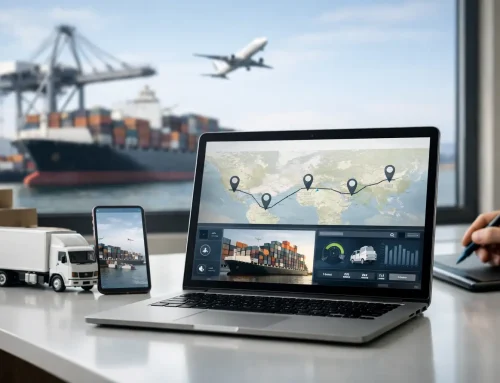

When inventory numbers look right in one system, wrong in another, and outdated everywhere else, operations slow down fast. That is usually the moment teams start asking what is a supply chain inventory visibility system, because spreadsheets, disconnected ERP records, and manual status checks stop working once complexity grows.
A supply chain inventory visibility system is software that gives your business a current, usable view of inventory across suppliers, warehouses, in-transit shipments, and customer fulfillment points. It does more than count stock on hand. It connects inventory data from multiple systems and partners so teams can see where goods are, what is available, what is committed, what is delayed, and what actions need attention.
For companies managing inventory across locations, carriers, suppliers, and internal teams, that visibility is not just convenient. It directly affects service levels, working capital, planning accuracy, and the speed of day-to-day decision-making.
What a supply chain inventory visibility system actually does
At a practical level, the system acts as a central layer for inventory intelligence. It pulls data from warehouse systems, ERP platforms, transportation tools, procurement workflows, supplier updates, and shipment tracking feeds. Then it turns that fragmented information into one operational picture.
That picture should answer simple but critical questions without forcing teams to chase five different departments. How much inventory is truly available? Which purchase orders are late? What stock is sitting in transit? Which location is at risk of a shortage? Where do allocations need to change?
The strongest systems do this in near real time. They do not just present static reports from yesterday morning. They continuously update inventory status as transactions happen, shipments move, and supplier timelines change.
Why inventory visibility is a supply chain problem, not just a warehouse problem
Many businesses first think about inventory visibility as a warehouse issue. In reality, the problem starts much earlier and stretches much further.
Inventory is shaped by procurement lead times, supplier performance, transportation delays, receiving bottlenecks, order prioritization, and demand changes. If your warehouse shows enough stock today but an inbound shipment is delayed by four days, your inventory position has already changed. If a supplier short-ships an order and no one sees it until receiving, the damage is already moving downstream.
That is why a supply chain inventory visibility system matters. It connects inventory status to the broader flow of goods. Instead of treating stock as something that only exists on a shelf, it treats inventory as a moving asset affected by every stage of execution.
Core capabilities to expect from a supply chain inventory visibility system
Not every platform is built the same, but most serious solutions should include a few foundational capabilities.
First, there is multi-location inventory tracking. Teams need to see stock across warehouses, stores, distribution centers, third-party logistics providers, and sometimes vendor-managed locations. A single-site view is too limited for modern operations.
Second, there is in-transit visibility. Inventory that has shipped but has not arrived still matters. Without in-transit tracking, businesses often overorder, under-allocate, or miss service commitments because they are planning around incomplete information.
Third, there is status clarity. Good systems distinguish between on-hand, available, reserved, damaged, inbound, delayed, and committed inventory. A total unit count alone is not enough to support decisions.
Fourth, there are alerts and exception management features. Visibility has limited value if teams still need to manually hunt for every issue. A better system flags late shipments, low-stock risks, mismatched receipts, supplier delays, and fulfillment constraints before they become expensive problems.
Finally, there are integrations. Inventory visibility software should connect with the tools your business already uses, especially ERP systems, transportation providers, supplier data sources, and warehouse operations platforms. If implementation depends on heavy manual work forever, the visibility will degrade over time.
What is a supply chain inventory visibility system solving?
The short answer is uncertainty.
Most inventory problems are not caused by a complete lack of data. They are caused by delayed data, siloed data, or data that cannot be trusted quickly enough to act on. One team sees a purchase order. Another sees a shipment. Another sees warehouse receipts. Finance sees valuation. Customer service sees backorders. No one sees the full chain clearly.
A supply chain inventory visibility system solves that by creating shared operational truth. That does not mean every data point is magically perfect. It means the business has one place to monitor inventory conditions, validate status, and coordinate action.
That shared view helps reduce familiar issues such as stockouts, excess inventory, rush shipping, poor replenishment timing, production disruptions, and customer promise dates that are based on outdated assumptions.
The business impact of better visibility
For decision-makers, the case for visibility usually comes down to three results: lower cost, higher control, and faster response.
Lower cost comes from reducing avoidable inventory buffers, emergency freight, manual reconciliation work, and lost sales tied to preventable shortages. When businesses can see inventory accurately across the network, they tend to buy and deploy stock more precisely.
Higher control comes from knowing what is happening before it turns into a service failure. If an inbound shipment is delayed, teams can rebalance inventory, update delivery commitments, or escalate with a supplier earlier. That time matters.
Faster response comes from removing the wait between problem and action. Instead of sending emails, calling warehouses, or checking multiple portals, teams can work from one operational view. That shortens decision cycles and improves accountability.
For first-time software buyers, this is often the biggest shift. The value is not just more data. It is less friction in how teams use data.
What these systems are not
It helps to set expectations clearly.
A supply chain inventory visibility system is not the same thing as a basic inventory management tool. Inventory management software may handle stock counts, reorder points, and warehouse transactions, but visibility systems go wider by combining inventory with supplier, shipment, and cross-network status.
It is also not a replacement for every system you already use. In many cases, it sits above or alongside ERP, WMS, TMS, and procurement tools to unify information and improve coordination. The goal is not to rebuild your stack from scratch. The goal is to make the stack work together.
And it is not valuable on features alone. A platform can promise dashboards, AI recommendations, and advanced analytics, but if users cannot trust the data or adopt the workflows quickly, results will lag. Simplicity matters just as much as functionality.
How to evaluate the right system for your business
The best choice depends on your operating model.
If you run a multi-warehouse distribution network, location-level inventory synchronization may be the priority. If supplier delays are hurting service, inbound visibility and supplier coordination may matter more. If your biggest issue is reacting too slowly to disruptions, exception alerts and real-time shipment updates should move higher on the list.
Look closely at implementation effort as well. Some platforms are powerful but slow to deploy. Others are easier to launch but limited once complexity grows. The right fit usually balances speed, usability, and enough depth to support your future state.
You should also ask whether frontline teams will actually use it. A visibility platform should help logistics, procurement, inventory, and operations teams make decisions faster, not bury them in extra screens and manual cleanup.
That is where vendors that focus on simplification tend to stand out. A platform like CatenaLogistix is built around centralizing inventory, shipments, suppliers, and analytics in one environment, which is especially useful for organizations that need enterprise-level oversight without a long ramp-up.
Signs your business needs one now
You probably need a supply chain inventory visibility system if teams are spending hours reconciling inventory across systems, if customer commitments are regularly changed because stock data was wrong, or if planners are carrying extra inventory because they do not trust what is already in motion.
Other signs are more subtle. Procurement may be overbuying to protect against uncertainty. Operations may be relying on tribal knowledge instead of system data. Finance may question inventory accuracy during month-end close. Customer service may be chasing shipment answers that should already be visible.
When those patterns show up together, the issue is rarely isolated. It usually points to a visibility gap across the supply chain.
The strongest operations are not the ones with the most software. They are the ones where teams can see the same reality, act early, and make inventory decisions with confidence. That is what a supply chain inventory visibility system is really for – fewer surprises, tighter execution, and a supply chain that feels manageable again.