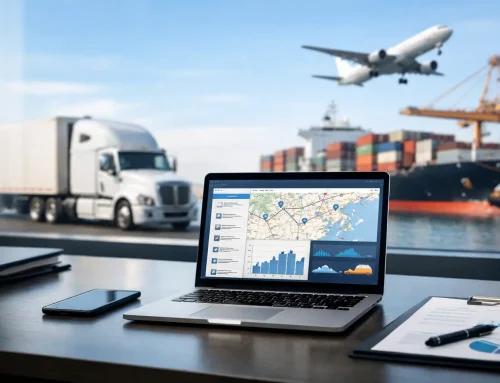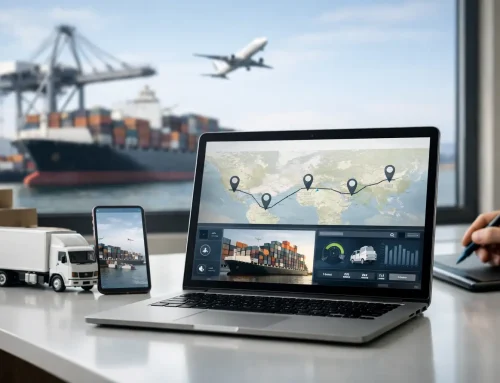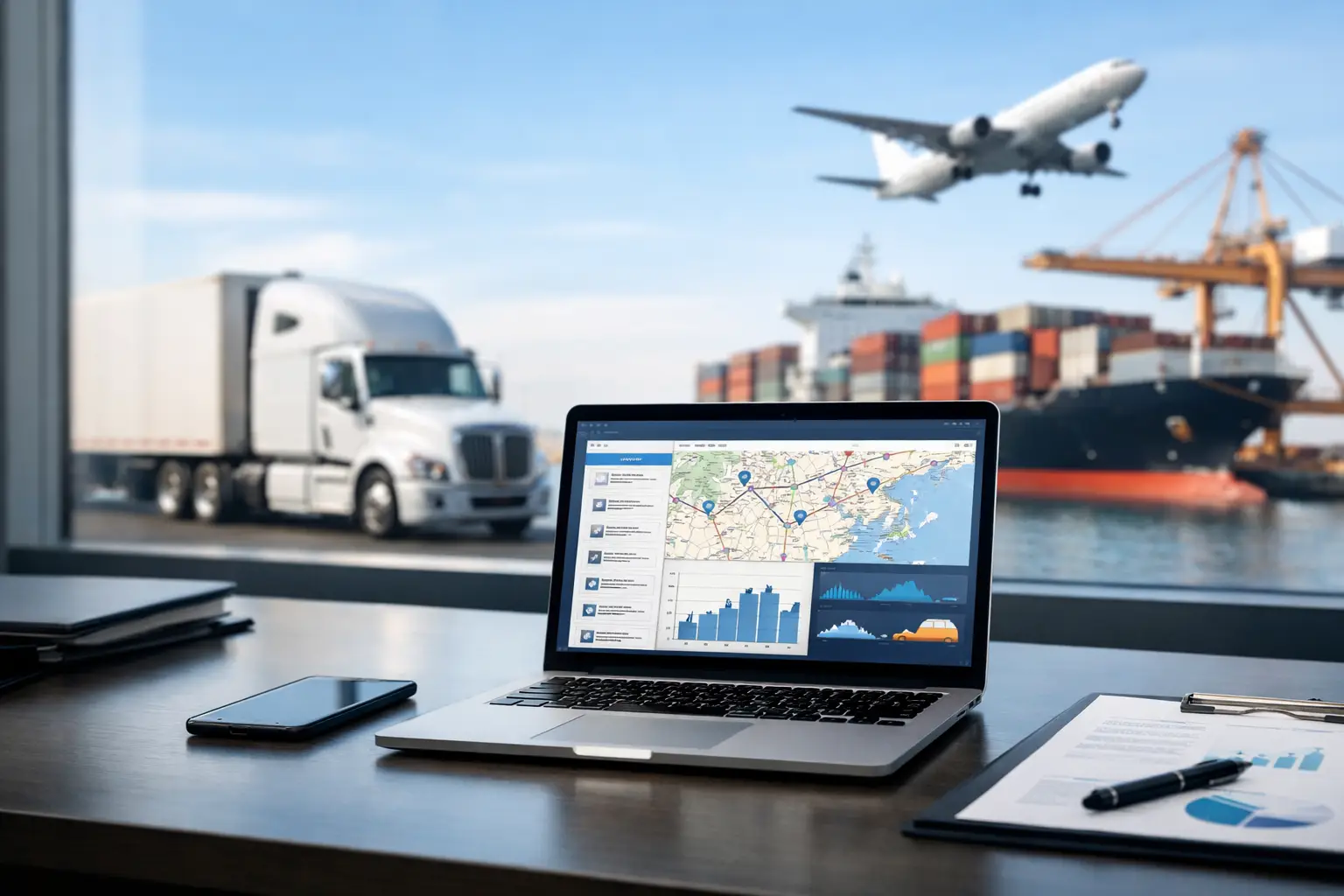

A truck is late, a customer is waiting, and your team is still refreshing carrier portals and texting drivers for updates. That is exactly where real time delivery tracking stops being a nice feature and starts becoming an operational requirement.
For logistics teams, the issue is not just visibility. It is control. When shipment updates live in disconnected carrier sites, inboxes, spreadsheets, and phone calls, every delay gets harder to manage. Teams spend more time chasing information than acting on it. That adds cost, slows response times, and creates avoidable service failures.
What real time delivery tracking actually solves
At a basic level, real time delivery tracking shows where a shipment is and whether it is moving on schedule. But the real business value goes further. It gives operations, procurement, customer service, and warehouse teams a shared source of truth while freight is still in motion.
That matters because most delivery problems are not caused by a total lack of data. They come from fragmented data. One carrier may show a pickup scan. Another may only update at major milestones. A dispatcher may know about a delay before anyone else. Without one place to consolidate that information, teams react late.
With live tracking, status updates become usable. You can see estimated arrival times, identify stalled shipments, and escalate exceptions earlier. For companies managing multiple carriers, suppliers, and locations, that shift is significant. It reduces guesswork and shortens the gap between problem and response.
Why visibility alone is not enough
Many companies believe they already have tracking because their carriers provide shipment status pages. In practice, that often creates more work than clarity.
A carrier portal can tell you where one shipment stands. It usually cannot show all in-transit orders across providers, facilities, and regions in one operational view. It also does not help much when your internal teams need alerts, reporting, or coordination tied to inventory, customer orders, or supplier timelines.
This is where real time delivery tracking becomes more than a customer-facing convenience. It becomes part of how the business operates. When tracking data feeds a centralized system, teams can prioritize late loads, adjust receiving schedules, notify customers proactively, and make better decisions about labor and replenishment.
That distinction matters for first-time software buyers. If you invest only in basic shipment visibility, you may still end up with manual follow-up, duplicate data entry, and limited accountability. If you invest in operational visibility, tracking becomes part of a broader workflow that improves performance.
The operational impact of real time delivery tracking
The strongest case for real time delivery tracking is not that it looks modern. It is that it improves measurable outcomes.
Delivery performance usually improves first. When teams can spot delays earlier, they have more time to reroute, reschedule, or communicate with customers. That reduces missed delivery windows and cuts down on last-minute escalation.
Labor efficiency improves too. Coordinators no longer need to spend hours checking shipment statuses across different systems. Warehouse teams can prepare for arrivals based on realistic ETAs instead of static schedules. Customer service can answer order questions without waiting on operations to investigate.
Then there is inventory accuracy. Inbound uncertainty often forces companies to hold more safety stock than they want. Better tracking does not eliminate inventory risk, but it helps planners make more informed decisions about when to expedite, when to wait, and when to reallocate inventory across locations.
There is also a customer impact that tends to be underestimated. When updates are timely and accurate, customers are more likely to trust the process even if a shipment runs late. Silence creates frustration faster than delay itself.
Where companies struggle during adoption
The promise of real time delivery tracking is straightforward. The rollout is where things get more nuanced.
The first challenge is data consistency. Not every carrier sends the same level of detail or updates at the same frequency. Some support detailed event feeds. Others rely on milestone scans. A good platform can normalize those differences, but no system can invent data that a partner does not provide.
The second challenge is process change. Visibility only helps if teams know what to do with it. If a delayed shipment appears in the dashboard but no one owns the exception, the technology will not solve the problem on its own. Clear workflows matter just as much as the tracking feed.
The third challenge is scope. Some companies start by tracking outbound deliveries and then realize inbound supplier shipments are just as critical. Others focus on one region, then need a broader rollout across divisions. That is not a reason to delay adoption. It is a reason to choose a system that can scale without forcing a complete restart later.
What to look for in a real time delivery tracking platform
If you are evaluating options, the best platform is rarely the one with the longest feature list. It is the one that turns shipment data into operational action quickly.
Start with integration depth. A platform should connect with your carriers, ERP, TMS, or order systems without months of custom work. Fast implementation matters, especially for teams that need results quickly and do not have large internal IT resources.
Next, look at exception management. Basic location pings are useful, but they are not enough. You need alerts for delays, missed milestones, route deviations, and at-risk deliveries. More importantly, those alerts should help teams prioritize what needs attention now.
Usability matters more than many buyers expect. If the interface is hard to navigate, adoption will stall. Operational teams need to find shipment status, ETAs, and issue flags quickly, whether they are in the office or on mobile.
Reporting is another major factor. Real time delivery tracking should not only show what is happening now. It should also help you understand patterns over time. Which carriers miss windows most often? Which suppliers create recurring inbound delays? Where do costs rise because teams are constantly reacting late?
A platform like CatenaLogistix fits this need well because it brings tracking, supplier coordination, analytics, and workflow visibility into one environment instead of adding another disconnected tool.
Real time delivery tracking and ROI
For decision-makers, the question is usually not whether visibility is useful. It is whether the investment pays back fast enough.
The answer depends on shipment volume, service complexity, and how much manual work your team is doing today. A company moving high volumes across multiple carriers often sees ROI faster because every avoided delay and every hour saved has larger impact. But even mid-market operations can justify the investment when customer service issues, detention costs, expediting, and labor inefficiency are all part of the current picture.
It also depends on what you are replacing. If your current process relies on spreadsheets, emails, and phone calls, the gain is usually obvious. If you already have a TMS with limited tracking, the value may come from stronger exception handling, better cross-team visibility, or easier onboarding across sites.
This is why buyers should look beyond software price alone. A cheaper system that creates extra manual work can cost more over time than a platform that centralizes the process and gets used consistently.
How to get started without overcomplicating it
The smartest rollout usually starts with one high-impact use case. That might be customer deliveries with strict appointment windows, inbound supplier shipments tied to production, or multi-carrier freight where visibility is currently weakest.
From there, define what success looks like. Faster response to exceptions, fewer check calls, improved on-time performance, and better ETA accuracy are all practical starting metrics. Keep them simple. If the first phase produces clear gains, expansion becomes much easier to justify internally.
It also helps to involve the teams that will use the system every day. Operations may care most about alerts and load status. Customer service may need quick access to delivery ETAs. Inventory planners may want better inbound timing. Good adoption happens when each group can see how the tool reduces work, not just how it adds data.
Real time delivery tracking works best when it is treated as an operating capability, not a standalone feature. The companies that get the most value from it are not the ones with the most dashboards. They are the ones that turn visibility into faster decisions, tighter coordination, and more predictable delivery performance.
If your team is still spending too much time asking where shipments are, that is usually the clearest sign that the process is ready for a better system.